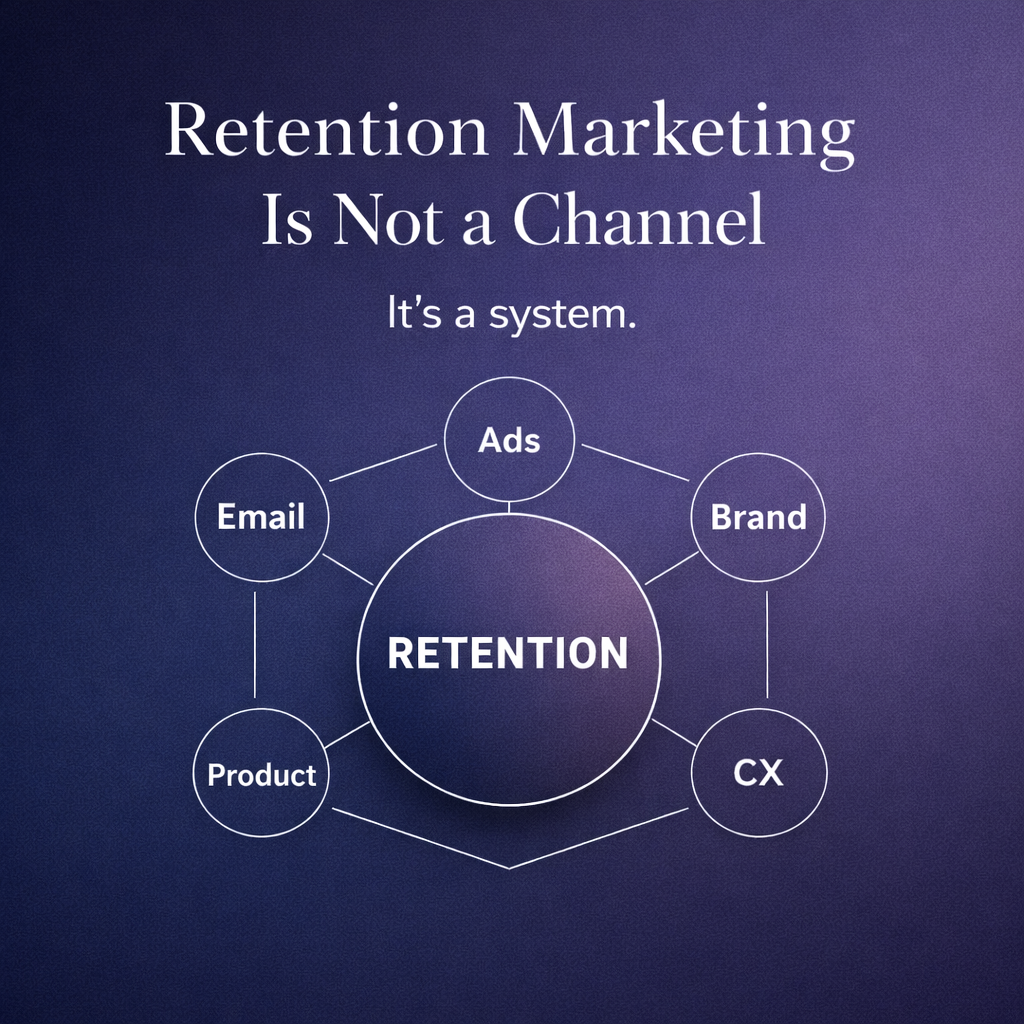
Focusing on strong customer retention isn’t a modern growth tactic. It’s the mechanism that has always separated brands that last from brands that are a flash-in-the-pan.
Long before dashboards, attribution models, and performance media, enduring brands understood a simple truth: profitability compounds when customers return by choice.
Retention Is How Brands Afford to Scale
Acquisition gets a brand noticed.
Retention makes it sustainable.
When customers come back:
- acquisition costs are amortized
- order value increases naturally
- demand becomes more predictable
- growth becomes less fragile
This isn’t theoretical. It’s how many of the most respected consumer brands have always operated.
A Fragrance Example: Jo Malone
Luxury fragrance brands are a masterclass in retention economics.
First time customer acquisition costs (CAC) might be $45, and a first-time customer might start with:
a 100ml cologne at approximately $160
That initial purchase is meaningful but when you consider the CAC + the cost of the ad agency + shipping + cost of goods, etc. the profit margin shrinks fast.
But that’s okay if the brand has exceptional customer retention plans in place.
Customer retention tactics are what encourage the buyer to:
- replenish the same scent
- introduce complementary products (candles, body wash, lotions)
- expand the customer’s scent wardrobe
A returning customer might:
- repurchase their signature fragrance annually
- add a $75 candle to fragrance their home
- gift a $150 cologne to someone else
Over time, that single customer relationship that cost $45 can easily exceed $400–$600+ in lifetime revenue, with really nice profitability.
(I talk more about repeat purchase math here.)
And importantly, Jo Malone doesn’t need to discount to make this work. The retention is earned through:
- consistent product quality
- distinctive packaging
- a clear brand identity customers want to associate with
“I’m someone who loves luxury fragrance” is an identity — not a transaction.
A Stationery Example: Moleskine
Stationery brands may seem simpler, but the retention mechanics are just as powerful.
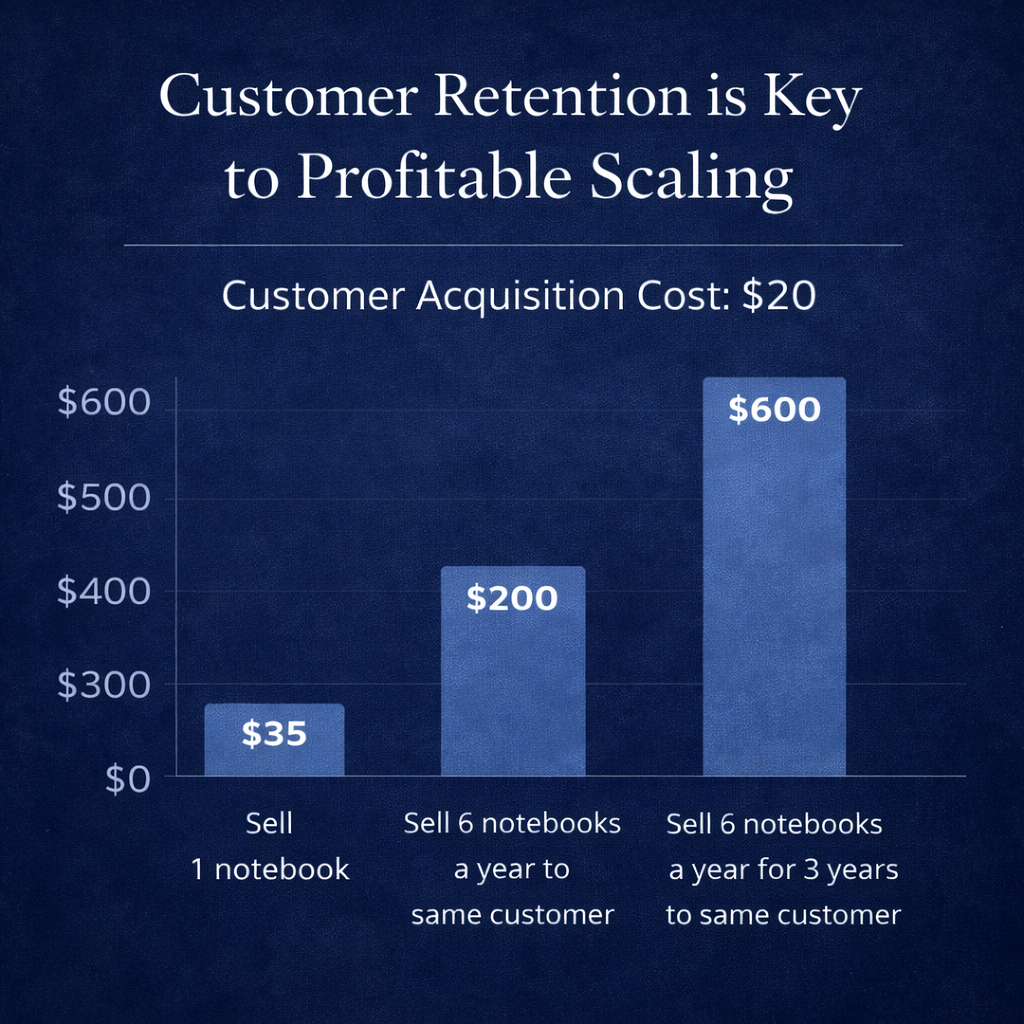
A customer may begin with:
a $25–$30 notebook
On its own, that’s not a high-margin business.
But Moleskine designs for repeat behavior:
- notebooks fill up
- new projects require new books
- formats vary (lined, dotted, planners, sketchbooks)
A committed customer may buy:
- 4–6 notebooks per year
- planners annually
- accessories or specialty editions
Suddenly, that customer represents:
- $120–$200+ per year
- for many years
Moleskine understands its customer deeply: serious writers, thinkers, planners, and creatives who value simplicity done well — and are willing to pay for it.
The brand doesn’t chase trends. It reinforces customer identity.
Customer Retention Is Earned, Not Engineered
Here’s the part many brands miss.
Customer retention isn’t something you install after acquisition via workflows. It’s something you earn through consistency, trust, and automated workflow delivery.
Only reputable brands generate:
- repeat purchase without coercion
- organic gifting behavior
- word-of-mouth recommendations
- expansion into new acquisition channels
When customers trust a brand, they become the channel.
This is how:
- gifting introduces new customers
- recommendations lower CAC
- brand affinity outperforms paid media
Retention creates acquisition — not the other way around.
Heritage Brands Are Built on Identity
What Jo Malone and Moleskine share isn’t price point or category.
It’s clarity of identity.
Customers don’t just buy products. They buy alignment with who they want the world to perceive them to be.
- “I’m someone who loves refined, luxury fragrances.”
- “I’m someone who writes, plans, and thinks seriously.”
Heritage brands understand who they’re for — and design every touchpoint to reinforce that belonging.
Retention follows naturally.
The Strategic Truth
Retention has always been the competitive advantage because it:
- compounds profitability
- stabilizes growth
- protects brand equity
- unlocks new acquisition through trust
Flash-in-the-pan brands optimize for the next new customer. Heritage brands design for the next relationship.