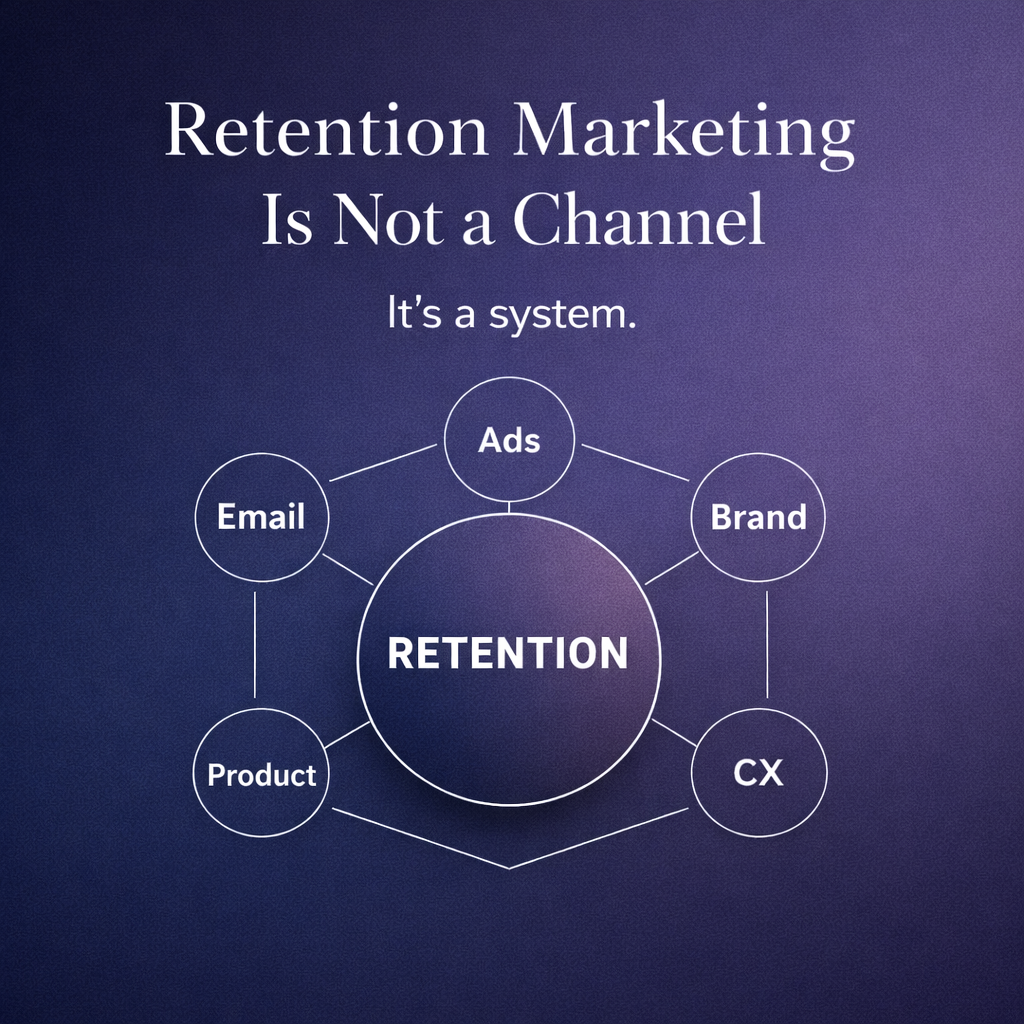
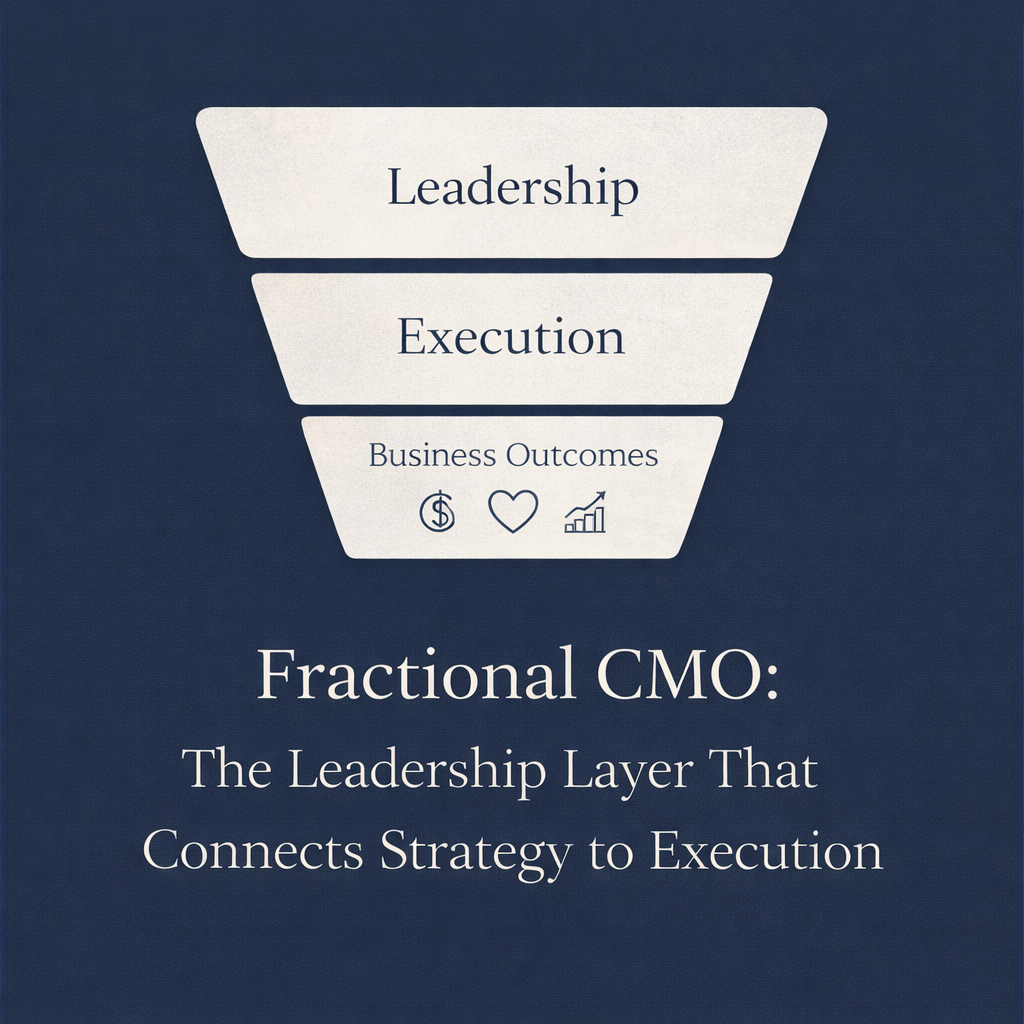
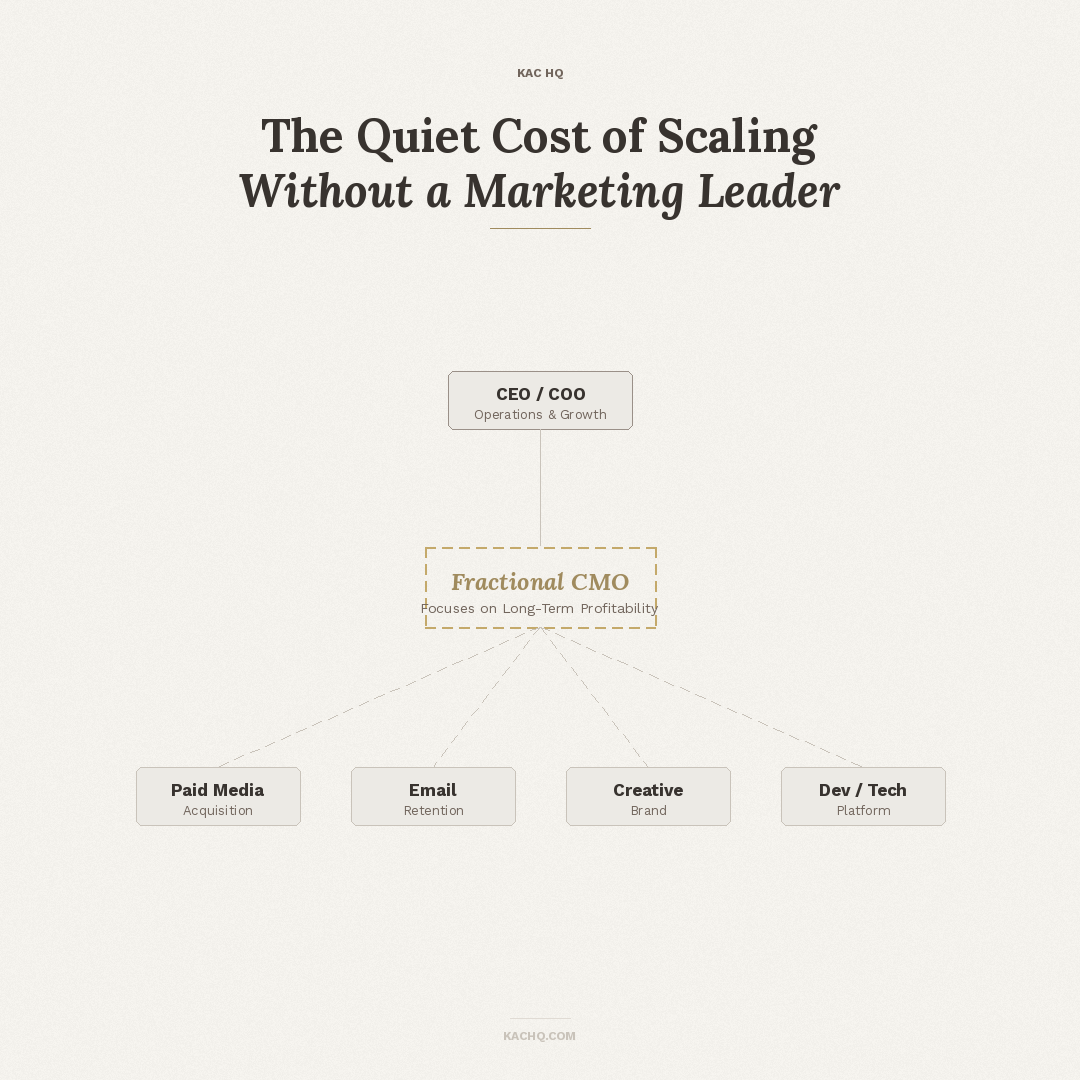
Early-stage brands design email flows to send messages, hoping to drive sales through weekly campaigns and basic email automations based on best practices (aka those pre-constructed flow templates in Klaviyo). But mature marketing automation for ecommerce brands is vitally important once a brand is looking at $10M in annual revenue.
Brands hitting midmarket need to start intentionally designing flows to strategically move customers through multiple purchases, delivering a high Customer Lifetime Value (CLV), making their Customer Acquisition Costs (CAC) more profitable.
Once a brand crosses roughly ten million in annual revenue, sales should be fully optimized for both new customer acquisition and repeat purchases — or you’re leaving millions on the table.
Marketing Automation Maturity Is About Handoffs
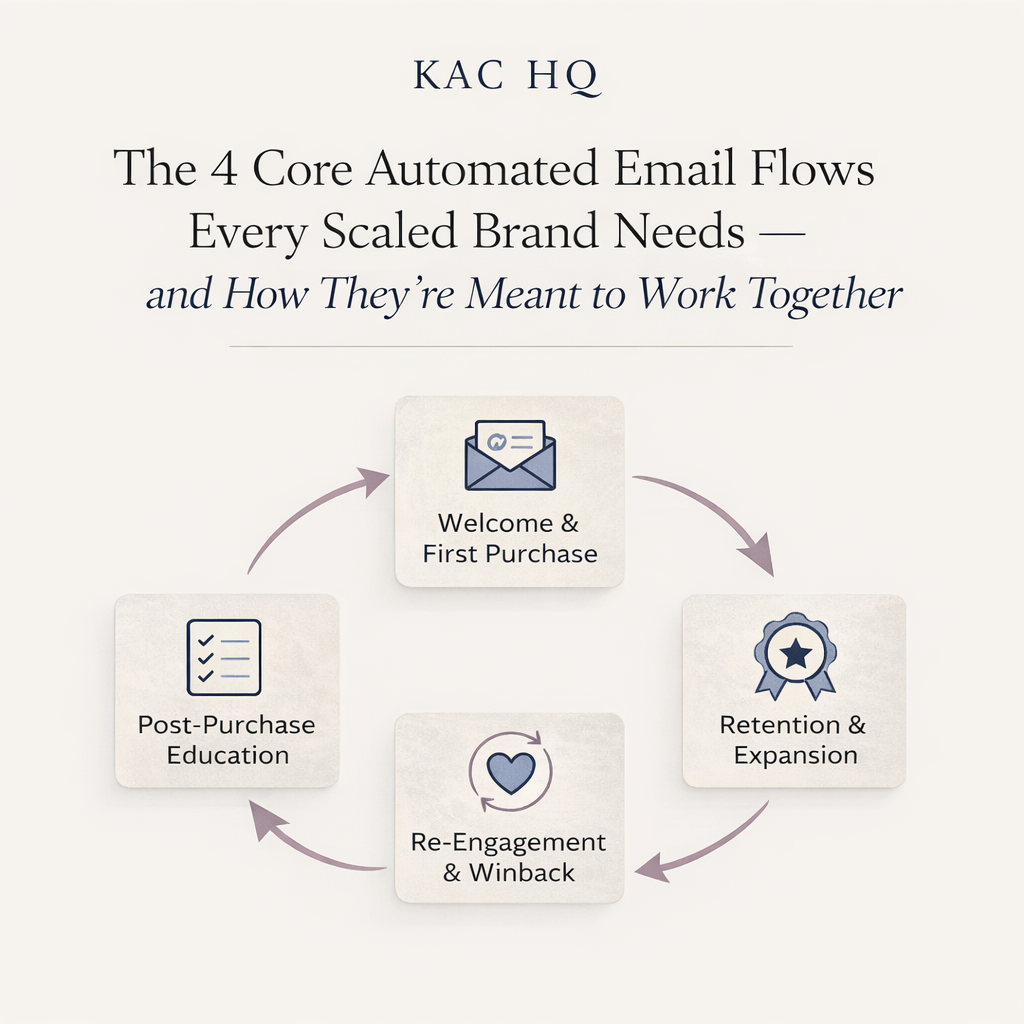
Most ecommerce brands think in terms of individual flows:
- welcome
- post-purchase
- retention
- winback
Each one gets built, tweaked, and optimized — often by different people/agencies, at different times, with different revenue goals in mind.
The result? Automation that technically works, but still leaves money on the table.
At scale, automation breaks down not because emails are bad — but because handoffs are unclear.
The Four Core Flows — As One Connected System
The Core Four flows shouldn’t be thought of as separately; They’re sequential phases of the same customer relationship.
The goal isn’t to “run” them — it’s to strategically orchestrate them.
1. Welcome & First-Purchase Conversion
Purpose:
Turn interest into confident commitment.
This flow sets the tone for the entire relationship, and it should:
- clarify who the brand is for
- reinforce the value proposition
- remove friction from the first purchase decision
Critical handoff:
The moment a customer purchases, this flow should stop — cleanly and immediately.
If it doesn’t, customers receive acquisition-oriented messaging after they’ve already converted, which creates confusion and erodes trust.
This flow’s sole job is to hand customers off to post-purchase education.
2. Post-Purchase Education & Reassurance
Purpose:
Confirm the customer made the right decision.
This is one of the most undervalued flows in scaled brands because buyer remorse can hurt your brand.
Strong post-purchase education:
- reduces buyer’s remorse
- accelerates time to value
- reinforces brand positioning
- sets the stage for repeat behavior
This flow should be proactive and reassuring, not promotional.
Critical handoff:
Once the customer has:
- received the product
- had time to experience value
they should graduate into retention logic — not remain stuck in onboarding indefinitely.
Post-purchase flows should prepare customers for their next purchase, not just their first experience.
3. Retention, Replenishment & Expansion
Purpose:
Turn satisfaction into a buying habit.
This is where lifetime value is built.
At scale, retention flows should:
- align with natural replenishment cycles
- encourage second and third purchases
- expand category adoption or order value
But timing here matters more than messaging.
Critical handoff:
As customers establish a purchasing cadence, retention messaging should adapt or pause. High-loyalty customers don’t need the same prompts as new ones; your high loyalty customers should go into their own segment.
Retention systems should recognize when behavior has stabilized — and respond accordingly.
4. Re-Engagement & Winback
Purpose:
Recover value when behavior changes.
Winback flows exist to address inactivity, not to replace retention.
Effective re-engagement:
- acknowledges the lapse without panic
- reintroduces relevance
- invites the customer back into the lifecycle
Critical handoff:
When a customer reactivates, they should return to post-purchase or retention logic — not get trapped in a winback loop.
Winback is a bridge, not a destination.
Why Timing Can’t Be Guesswork at Scale
Early-stage brands rely on best practices:
- seven-day waits
- thirty-day winbacks
- generic replenishment windows
As you scale into the midmarket space, you have better information.
Maturing brands should design timing based on:
- time to second purchase
- purchase frequency by cohort
- lifetime value curves
- observed replenishment behavior
Automation timing is a decision. At scale, it should be a data-informed one.
Best Practices vs. Owned Data
Best practices are useful when you don’t have data. At scale, they become a constraint.
When brands continue running automation based on external benchmarks instead of internal behavior, they miss the opportunity to refine systems around their customers.
Best practices are training wheels. Once real lifecycle data exists, they should come off.
Automation Is Lifecycle Infrastructure
Automation maturity isn’t measured by how many flows you have.
It’s measured by whether those flows:
- hand off cleanly
- respect customer timing
- reinforce the same lifecycle logic
At scale, email isn’t just a channel. It’s the infrastructure that supports predictable growth and higher profit margins by driving higher LTV.
The brands that win long-term aren’t the ones sending more emails. They’re the ones focused on lifecycle marketing and retaining customers for the long haul to increase profits.