Core Insight
Most brands chase profitability by lowering acquisition costs, and this is important, but at some point, you reach a plateau. Then what? Enduring brands grow profitability by designing for what happens after the first purchase.
New customer acquisition brings revenue in.
Repeat purchase rate is where profit compounds.
The Simple Math for Repeat Purchase Rate
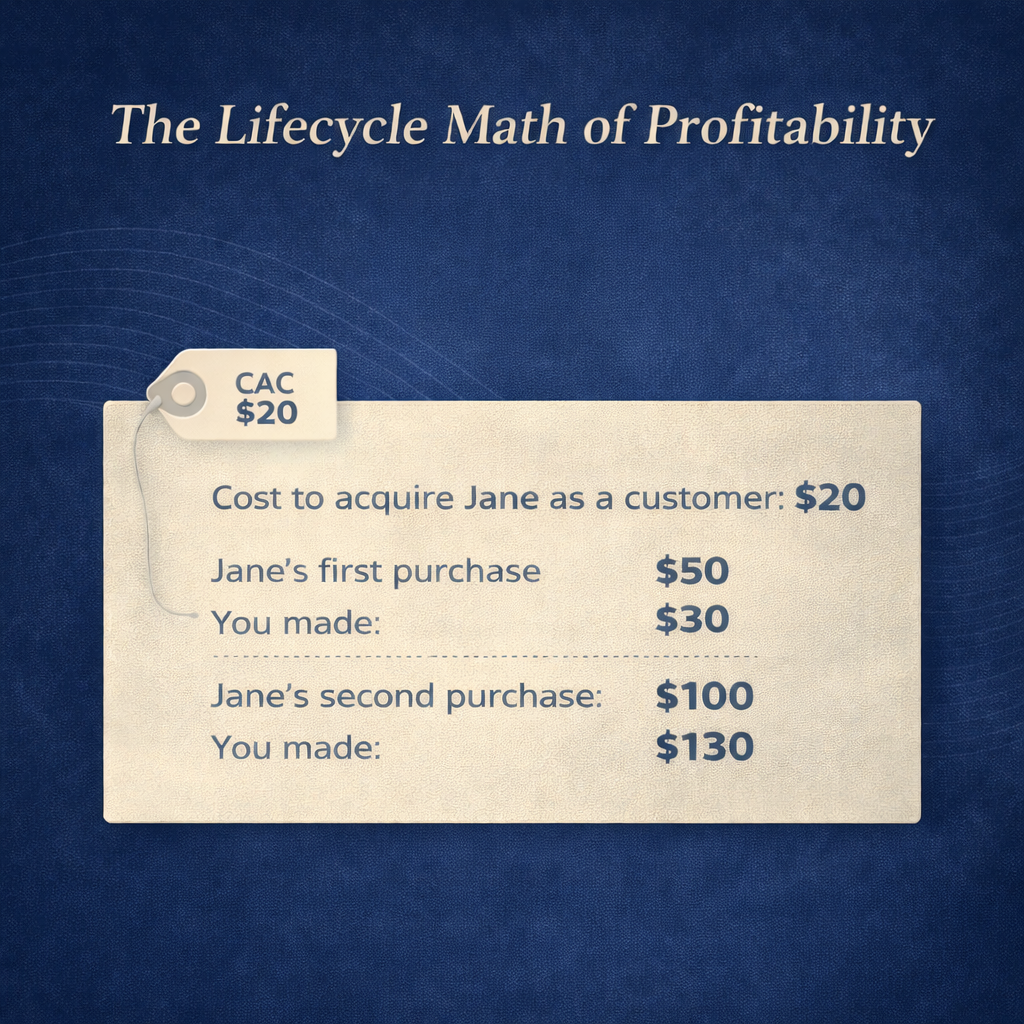
For the sake of this post, let’s use simple math:
- Customer acquisition cost (CAC): $20
- First purchase: $50
On the first transaction:
- Revenue: $50
- Acquisition spend: $20
- Profit: $30
That looks healthy. Many brands stop the analysis here.
But now consider what happens when that same customer returns.
- Second purchase: $100
- Additional acquisition spend: $0
Now the math changes dramatically:
- Total revenue: $150
- Total acquisition spend: $20
- Total profit: $130
Nothing about this profitability improvement came from acquiring new customers; it came entirely from repeat purchase behavior.
Where Profit Actually Compounds
This is the part most growing companies ignore until it can’t be ignored any longer…
When customers return:
- Acquisition costs are amortized over time
- Margins widen naturally
- Cash flow becomes more predictable
- Growth becomes less fragile
Profitability doesn’t increase because marketing worked harder or spent more. It increases because each stage of the marketing lifecycle is intentionally designed to drive additional revenue.
This is why brands that rely solely on first-purchase economics feel constant pressure. Every month starts at zero.
Brands with strong repeat behavior operate differently. Each new cohort builds on the last.
Increasing Repeat Purchase Rates Is a Behavioral Outcome
Lifetime value is the metric that stands for how much revenue you can expect to make from each customer, and your repeat purchase rate directly influences it. It is not a metric you “optimize” in a day. It is the result of generating revenue from the same customer over time, and it can always get better.
Repeat purchase behavior is shaped by:
- What happens after the first purchase
- How quickly customers are re-engaged
- Whether trust compounds or erodes
- How consistently value is delivered
These outcomes don’t happen by accident. They are designed in your marketing lifecycle architecture.
Brand Profitability Thrives with Strong Repeast Purchase Rates
Brands that stand the test of time are not the ones that endlessly acquire new customers. They are the ones who build systems that keep the right customers coming back.
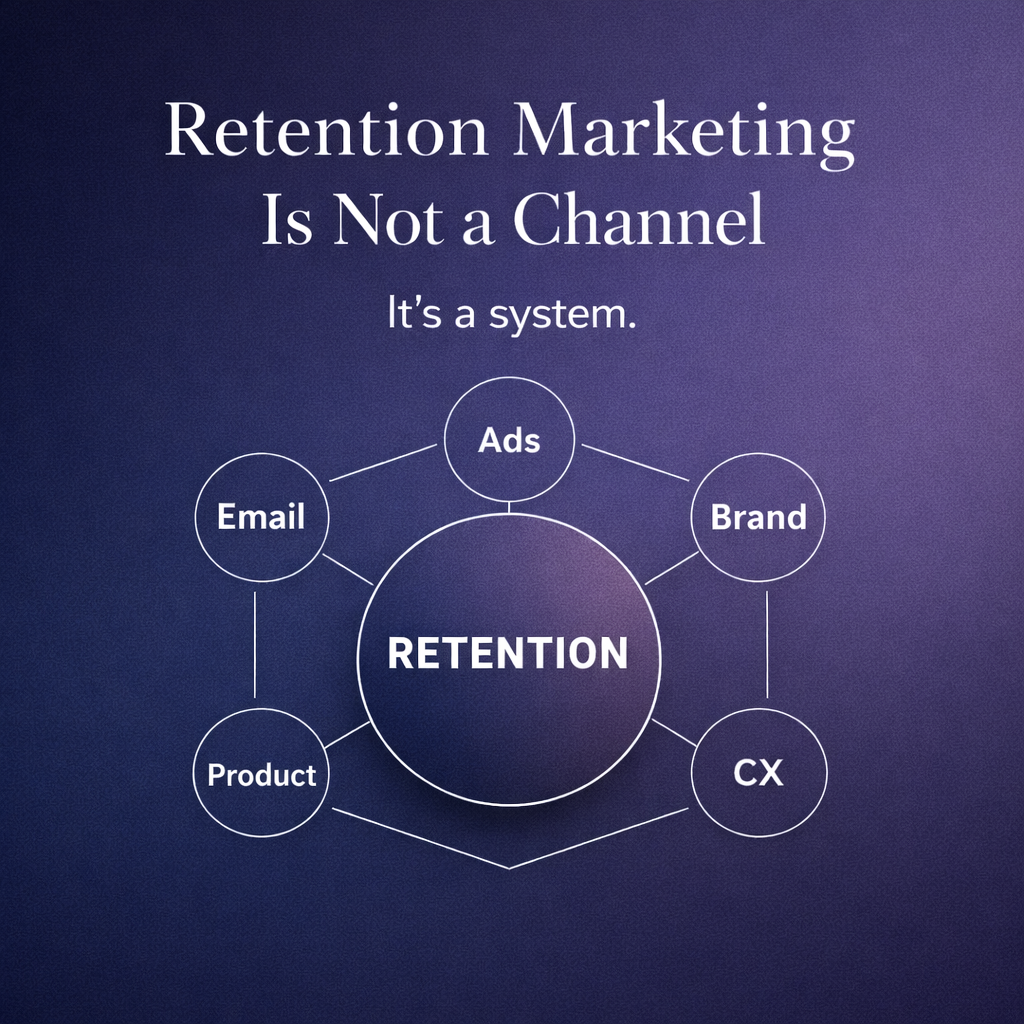
Lifecycle marketing is not about sending more emails or running more flows.
It is about designing the customer relationship intentionally from first purchase to long-term loyalty.
This is where:
- Profitability stabilizes
- Growth becomes durable
- Brand equity compounds alongside revenue
The Strategic Takeaway
If a brand’s profitability depends entirely on the next acquisition, it is operating on borrowed time.
Lifecycle strategy turns growth into something sustainable.
It is where short-term revenue becomes long-term value.
This is where the real money is made.
If you’re ready to build out your lifecycle marketing architecture, use this simple assessment to identify your most urgent gaps.