Most brands think they have a retention marketing strategy because they have welcome sequences, post-purchase flows, and maybe a win-back campaign or two running in the background. Emails are going out, people are converting, and the dashboards look fine.
But retention marketing is not email marketing.
Email is one channel inside a much larger system — and when brands treat it as the whole system, they end up wondering why their customers aren’t staying longer, spending more, or coming back at the rates they need to hit their growth goals.
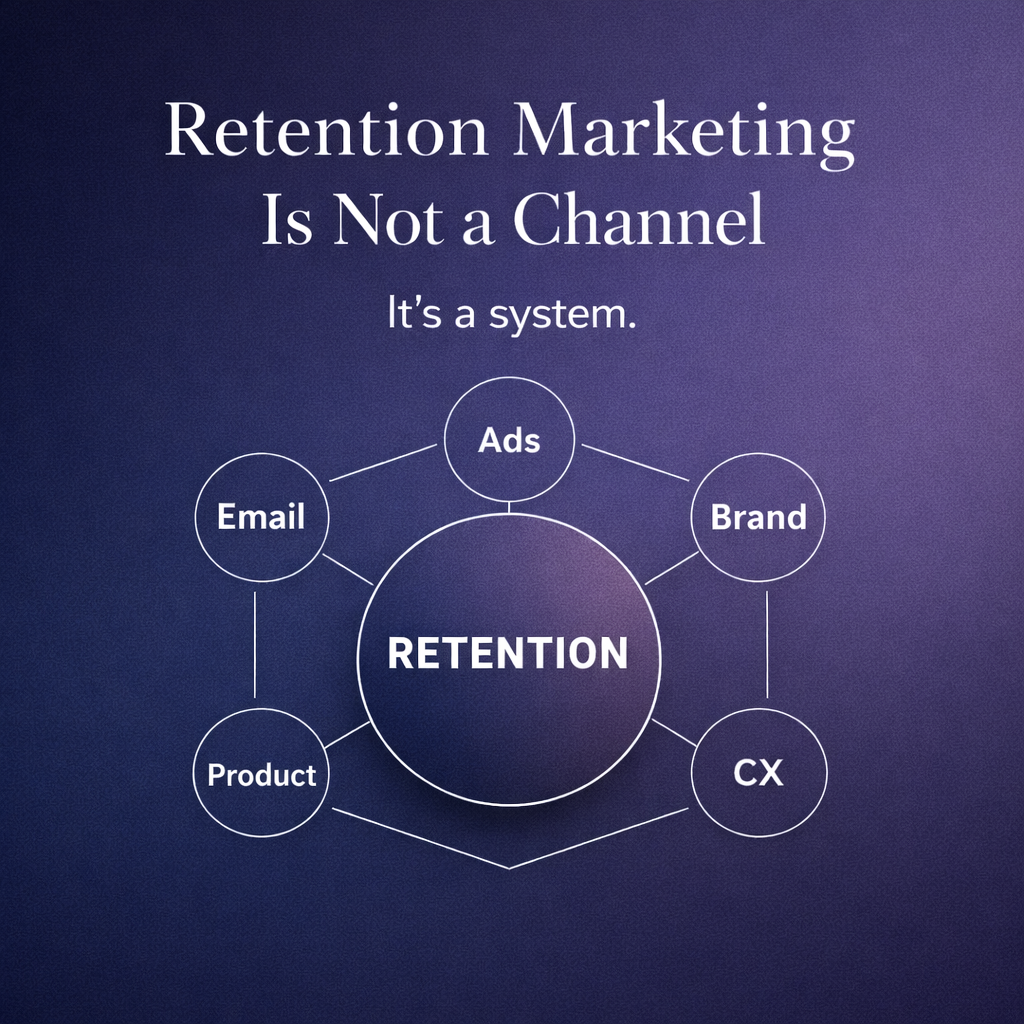
Retention marketing, done well, touches product, customer service, brand, retargeting, and leadership. The brands that actually retain customers at scale aren’t just running better automations. They have someone responsible for the entire retention function — someone connecting the dots that most teams don’t even realize are disconnected.
If your retention efforts feel like they’re running but not really moving the needle, this is probably why.
What Is Retention Marketing?
Retention marketing is a strategy focused on keeping existing customers engaged, purchasing, and loyal over time — spanning email, retargeting, customer service, product, and brand, not just automated flows.
It’s everything that happens after someone converts for the first time — the systems, touchpoints, and decisions that determine whether that customer becomes a repeat buyer or quietly disappears.
Where acquisition marketing focuses on bringing new customers in the door, retention marketing focuses on making sure they stay. And the math behind it is worth paying attention to: retaining an existing customer costs significantly less than acquiring a new one, and returning customers tend to spend more per order and convert at higher rates than first-time buyers.
That’s why retention is where profitability lives. It’s not the flashiest part of your marketing plan, but it’s often the most impactful on your bottom line.But here’s where most definitions fall short: they reduce retention marketing to a list of tactics. Email flows. Loyalty programs. SMS campaigns. Those are channels, not the strategy itself. Real retention marketing is much broader than any single channel — and that’s where the gap starts.
In short, retention marketing is not a channel — it’s a cross-functional business outcome. Any team or touchpoint that influences whether a customer stays or leaves is part of your retention marketing strategy, whether it lives in your email platform, your ad account, your support queue, or your product roadmap.
Why Growing Brands Get Retention Marketing Wrong
The most common mistake in retention marketing isn’t bad execution. It’s a narrow definition of what retention actually includes.
For most scaling brands, retention lives inside the email team. Maybe there’s a dedicated email marketer or a lifecycle agency managing flows in Klaviyo or Kit. Welcome series, post-purchase sequences, win-back campaigns, abandoned cart reminders — the usual suspects. And these are important. They’re a critical piece of the puzzle.
But they’re only one piece.
Retention marketing also includes retargeting ads that bring lapsed customers back before they’ve churned. It includes brand awareness campaigns that keep your name top-of-mind between purchases. It includes customer service interactions that either strengthen or erode the relationship in real time. It includes product development — because the single most effective retention strategy is making something people actually want to buy again.
When you zoom out, retention isn’t a marketing channel. It’s a cross-functional business outcome. It’s influenced by every team that touches the customer experience — marketing, product, support, operations, even fulfillment.
And yet, in most organizations, nobody owns that outcome. The email team owns email. The ads team owns ads. Customer service owns tickets. Product owns the roadmap. Everyone is optimizing their lane, but nobody is looking at retention as a system and asking: are all of these pieces working together toward the same goal?
That’s not a people problem. It’s a leadership gap.
What a Real Retention Marketing Strategy Looks Like
A real retention marketing strategy isn’t just a collection of automated flows. It’s a system with someone at the helm making sure every customer-facing function is working toward the same retention goals.
Here’s what that looks like in practice.
A complete retention marketing strategy operates across five layers: email and lifecycle flows, retargeting and paid re-engagement, brand and content, customer service and experience, and product.
Email and Lifecycle Flows
This is the layer most brands already have. Welcome sequences, post-purchase emails, replenishment reminders, win-back campaigns. These are the automated touchpoints that keep communication open between purchases. They matter. But they’re the floor, not the ceiling. If your entire retention strategy lives here, you’re building on a single pillar.
Retargeting and Paid Re-Engagement
Not every customer opens their email. Retargeting ads on Meta, Google, and other platforms catch the customers who’ve gone quiet in the inbox but are still reachable through paid channels. A retention-first retargeting strategy isn’t just throwing broad audiences into a prospecting campaign — it’s building segmented audiences based on purchase behavior, lapse windows, and lifetime value tiers, and serving them messaging designed to bring them back.
Brand and Content
Brand awareness doesn’t stop after acquisition. The brands with the strongest retention rates are the ones that stay in their customers’ lives between purchases. That happens through organic social, content marketing, community building, and brand storytelling that reinforces why someone chose you in the first place. This is the kind of retention work that doesn’t show up in a Klaviyo dashboard but absolutely shows up in your repeat purchase rate.
Customer Service and Experience
Every support ticket is a retention moment. A customer reaching out with a problem is giving you a chance to either strengthen the relationship or break it. Brands with high retention rates don’t just resolve issues — they treat customer service as a feedback loop that informs product, marketing, and operations. When the support team notices the same complaint surfacing repeatedly, that’s retention data. Someone needs to be listening.
Product
No amount of clever marketing can retain a customer who doesn’t love the product. The most overlooked retention strategy is making products people genuinely want to repurchase. That means someone from the marketing leadership team should have a seat at the product development table — not to design the product, but to bring customer insights, purchase behavior data, and retention metrics into the conversation. What are customers buying once and never again? What are they returning? What do they wish you made? That’s retention intelligence, and it should inform product decisions.
When all five of these layers are aligned, retention isn’t something you hope happens after the sale. It’s something you’re actively engineering at every stage of the customer relationship.
Who Should Own Retention Marketing?
This is the question that trips most brands up. If retention marketing spans email, ads, brand, product, and customer service — who is actually responsible for making sure it all works together?
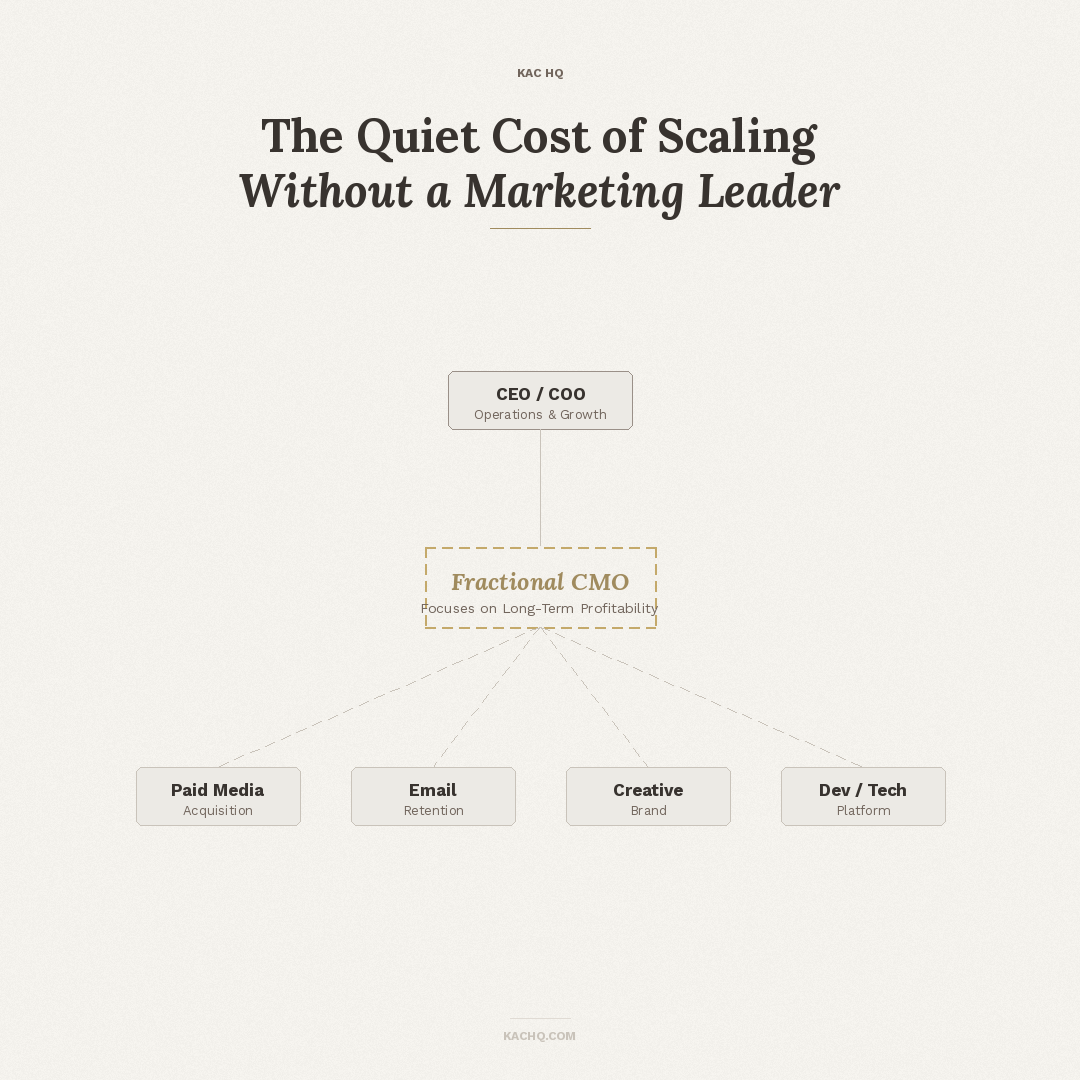
The honest answer: it can’t be your email marketer. Not because they aren’t talented, but because the scope of retention marketing extends far beyond what any single-channel specialist is positioned to influence. Your email marketer can optimize open rates and click-through rates all day long. They can build brilliant flows. But they’re not in the product development meeting. They’re not reviewing customer service data. They’re not adjusting retargeting strategy based on cohort analysis.
Similarly, your agency — even a great one — is working within a defined scope. Agencies are built to execute, not to set the strategic direction. They can run retention campaigns brilliantly, but they’re not embedded in your organization deeply enough to connect what’s happening in support tickets to what should change in your email sequences.
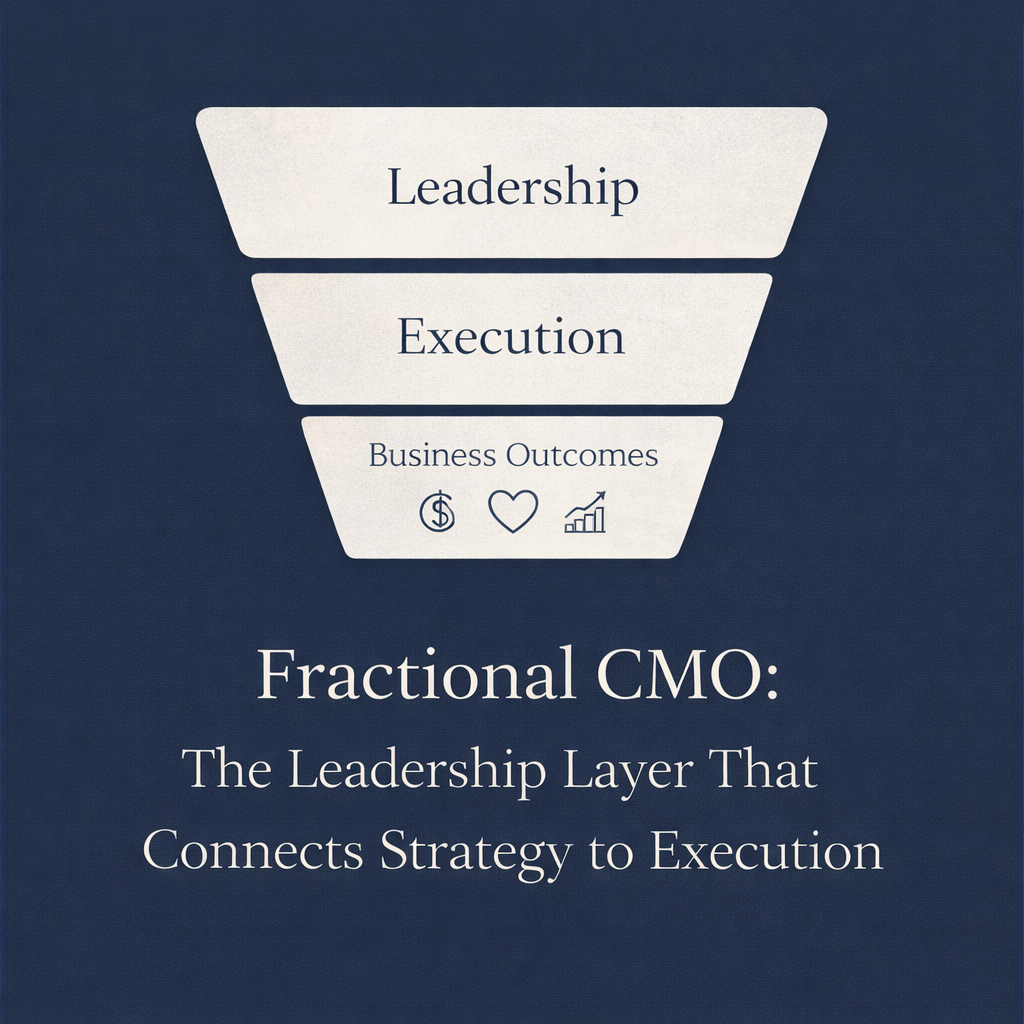
Retention marketing needs someone at the leadership level who can see across every function, set the KPIs, and hold the entire system accountable. Someone who sits in the executive meetings and the marketing meetings. Someone who can translate customer data into strategic decisions that touch product, support, advertising, and lifecycle — not just one of those things in isolation.For many scaling brands, that person is a fractional CMO. Not a consultant who drops in with a deck and leaves. A fractional CMO embeds in your business part-time — attending product meetings, reviewing support trends, aligning ad spend with retention goals, and giving your lifecycle team direction that actually ties to business outcomes.
The Promote-From-Within Path
Here’s a scenario that plays out often in scaling brands: you have a rockstar on your email or lifecycle team. They’ve been with you for a while. They know the brand, the customers, and the product inside and out. You see leadership potential in them. You’re thinking about promoting them into a bigger role — maybe even a CMO title down the road.
That instinct is great. Promoting from within is one of the strongest moves a growing brand can make, because that person has institutional knowledge and relationships that can’t be hired for.
But there’s a gap between being excellent at one channel and being ready to lead a cross-functional retention strategy. Owning retention at the leadership level means understanding how to set KPIs across multiple teams, manage agency relationships, present to leadership in terms of profitability and lifetime value, and make strategic trade-offs between acquisition and retention budgets.
That’s a skill set that takes time to develop. And the fastest way to develop it is under the mentorship of someone who’s already done it.
This is where a fractional CMO becomes more than a strategic hire — it becomes a development investment. The fractional CMO leads the retention strategy while your rising internal leader works alongside them, absorbing the frameworks, the decision-making process, and the cross-functional thinking they’ll need. Over six to twelve months, the fractional CMO works themselves out of a job — because your internal leader is ready.
It’s not about replacing the person you already have. It’s about investing in their growth so they can own something bigger.
How to Know If Your Retention Strategy Has a Gap
The tricky thing about a retention leadership gap is that it doesn’t announce itself. Your flows are still running. Customers are still converting. The dashboards don’t flash red. The gap shows up slowly — in margins that aren’t improving, in customer retention rates that plateau, in a repeat purchase rate that should be higher but nobody can explain why it isn’t.
Ask yourself: does someone in your organization own retention as a cross-functional outcome, not just a channel? Can you explain how your email strategy, ad strategy, product roadmap, and customer service approach are all working toward the same retention goals? When a customer churns, does someone investigate why — and does that insight change how other teams operate?
If those questions feel hard to answer, the issue isn’t that your team isn’t working hard enough. It’s that the system doesn’t have a leader. And retention, more than almost any other function in a scaling brand, needs one.
Frequently Asked Questions
What is retention marketing?
Retention marketing is a strategy focused on keeping existing customers engaged and purchasing over time. Unlike acquisition marketing, which brings new customers in, retention marketing focuses on increasing repeat purchases, lifetime value, and loyalty. It includes email and lifecycle flows, retargeting ads, brand awareness, customer service, and product development — any touchpoint that influences whether a customer stays or leaves.
Is retention marketing the same as email marketing?
No. Email marketing is one channel within a retention marketing strategy, but it’s not the whole picture. Retention also includes paid retargeting, brand campaigns, customer experience, and product decisions. Treating email as the entirety of your retention strategy is one of the most common mistakes scaling brands make.
A complete retention marketing strategy includes at least five layers: lifecycle email, paid retargeting, brand and content, customer service, and product.
What’s the difference between retention marketing and acquisition marketing?
Acquisition marketing focuses on bringing new customers in. Retention marketing focuses on keeping the customers you already have engaged, purchasing, and loyal. Both are essential, but retention is where profitability tends to live — because the cost of keeping a customer is significantly lower than the cost of acquiring a new one.
Who should be responsible for retention marketing?
Because retention spans multiple functions — email, ads, product, support, brand — it needs someone at the leadership level to own it. This is typically a CMO or fractional CMO who can see across departments, set unified KPIs, and ensure every team is working toward the same retention outcomes.
How do I know if my retention marketing strategy is working?
Key metrics to watch include customer retention rate, repeat purchase rate, customer lifetime value, and the ratio of revenue from returning customers vs. new customers. If these numbers are flat or declining despite active email campaigns and marketing spend, the issue is likely systemic — not tactical.
Can a small team run an effective retention marketing strategy?
Yes, but the key is strategic alignment, not headcount. A small team with clear retention KPIs and someone connecting the dots across channels will outperform a larger team where each person is siloed in their own lane. For many brands, a fractional CMO provides that strategic layer without the cost of a full-time executive hire.
What are the best retention marketing strategies?
The most effective retention marketing strategies combine multiple layers rather than relying on a single channel. These include lifecycle email flows like welcome sequences and win-back campaigns, retargeting ads segmented by purchase behavior and lapse windows, brand awareness campaigns that keep your name top-of-mind between purchases, proactive customer service that treats support interactions as retention moments, and product development informed by customer behavior data.
The brands with the strongest retention rates are the ones that align all five layers under unified leadership and KPIs.
If your retention strategy feels like it’s running but not really driving the profitability and growth you need, the issue probably isn’t your email flows. It’s the layer above them. Let’s talk about what that layer looks like for your brand.